– In Thin Air
In Thin Air
a series of works on background noise, on the fluid and gradual articulation between figure (sign, message) and ground (white noise, unperceived stimulus).
* * *
In Thin Air (Santa Caterina)
sound installation, 2009
“A now-famous anecdote tells of Cage visiting NASA’s soundproof room at Harvard University. Expecting absolute silence, he instead heard two sounds: one high and one low. The first, he was told, was his nervous system, the second his circulatory system. Even silence could not be silent.”
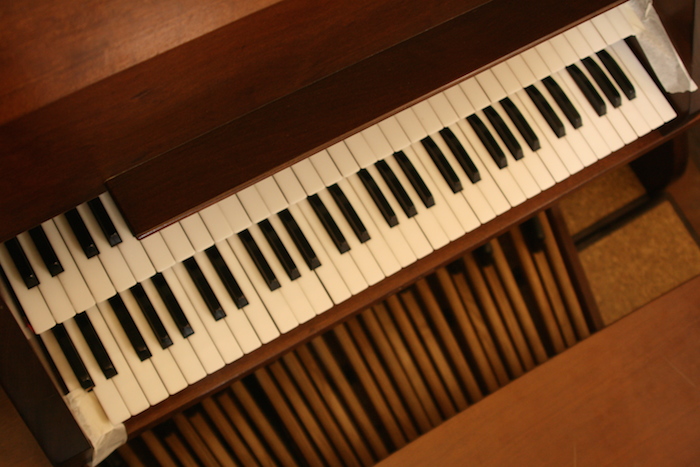
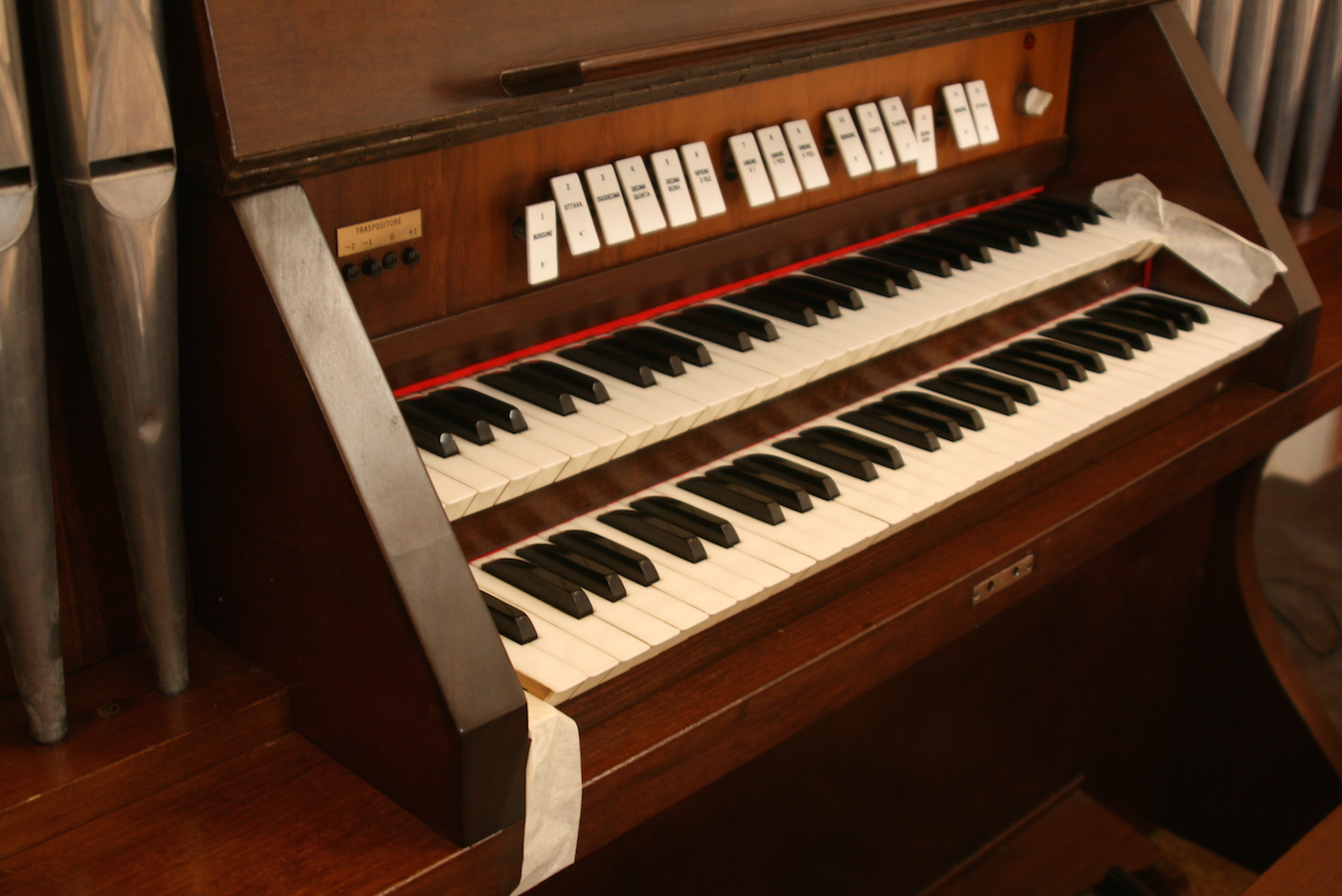
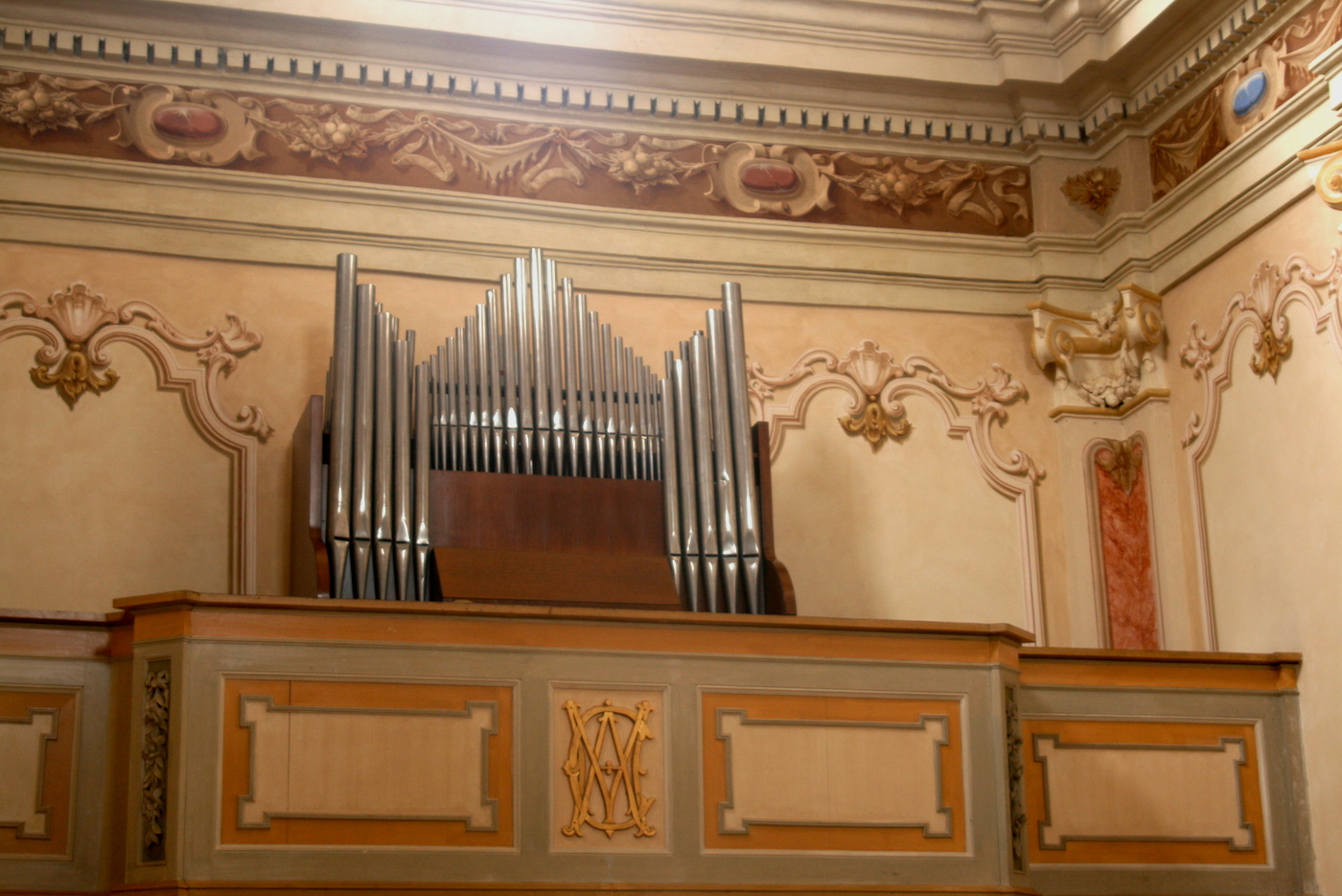
The organ of the small church of Santa Caterina in Banna was used as a machine instead of an instrument for sacred music. Because the organ was electrically driven, I used masking tape to hold down its lowest and highest keys so that they would constantly produce sound.
The result was a continuous background sound inside the church, difficult to attribute to the organ at first. The sound was composed of a low rumble and a high-pitched hiss, representing the organ's acoustic limits — the closest to the limits of human hearing.
Exhibited at Fondazione Spinola Banna per l'Arte, Banna, Italy (2009).
* * *
In Thin Air (Duo)
two-channel sound installation, 2011
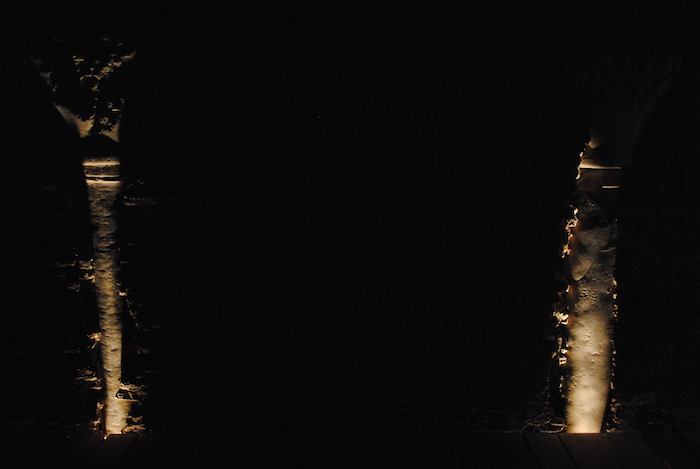
Installation view, Galleria A+A, Venezia
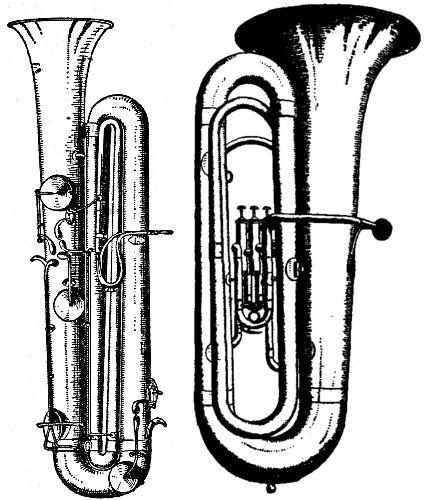
The installation features the recording of the lowest-pitched sound emitted by the lowest-pitched wind instruments in the classical orchestra: the contrabassoon and the contrabass tuba. These sounds represent the orchestra's limits, the closest to the lower limit of human hearing.
It consists of two sound sources reproducing low-pitched, dull, and continuous sounds that are not immediately noticeable. They resemble background noises produced in everyday environments: engines, refrigerators, heating systems, and ventilation systems.
The sound's volume varies in a sinusoidal pattern, ranging from barely perceptible to very loud. This cycle (from maximum to minimum to maximum again) takes 12 minutes to complete and repeats in a loop. The perception of the space differs depending on the phase of the cycle when the visitor enters.
The work is both perceivable and imperceivable, depending on when it is experienced. The distinction is gradual: the sound continuously traverses the intensity range and oscillates between its two statuses: figure and ground.
* * *
In Thin Air (Centre d’Histoire de la Résistance et de la Déportation)
sound installation, 2011
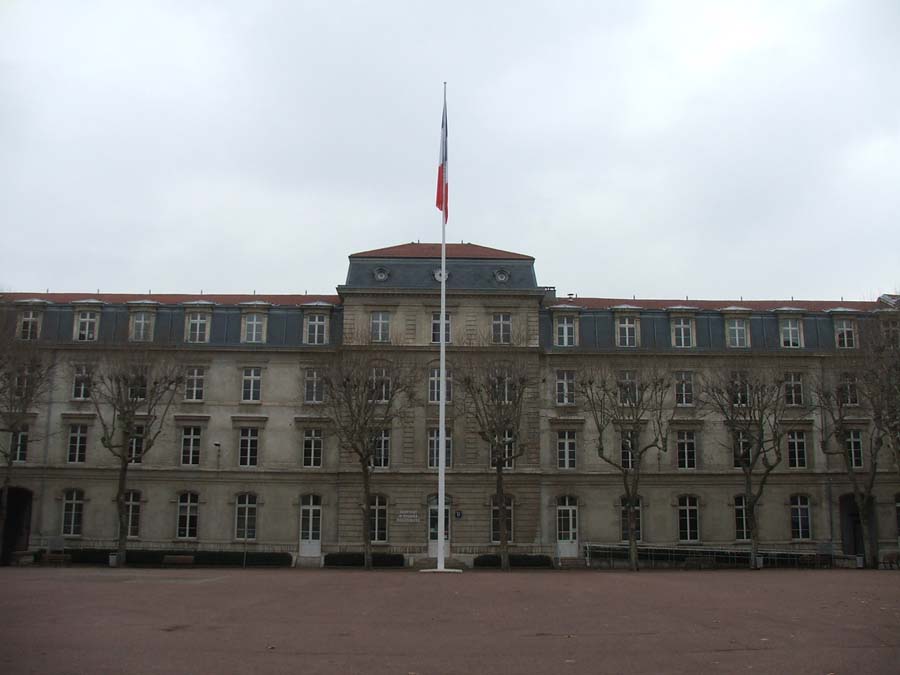
The sound installation is composed of background noises recorded in the empty exhibition space of the Centre d’Histoire de la Résistance et de la Déportation (Resistance and Deportation History Centre) in Lyon, housed in the building that formerly served as the Gestapo headquarters during the German occupation.
The sounds are reproduced with a volume that varies in a sinusoidal pattern, ranging from barely perceptible to very loud. This cycle (from maximum to minimum to maximum again) takes 12 minutes to complete and repeats in a loop. In this way, the perception of the space shifts depending on the phase of the cycle when the visitor enters the exhibition space.
The installation was presented in Lyon at Les Subsistances, as part of the Résonance program of the 2011 Lyon Biennial.